
 Våg
 Mulet
 Torg
 Cirkus
 Frost
 Fajans
 bitte
 Glänta
 Ståmp
 blur
 Terre
 RIMs
 Root
 It
 Chroma
BRAND, SELECT, Staff favourites, About Tableware, Journal
Hot-Pot Season Has Arrived

Iga 8-sun Donabe
Shown: Eld Trivet LL / LINEN TALES Tea Towel, Light Purple
Autumn 2017 turned cold suddenly. At POTPURRI, we introduced tableware and tools to warm both the meal and the mood. About a year earlier, our team visited Kanedai Pottery in Marubashira, Mie, while developing the Eld ceramic skillet collection. Among the remaining Iga ware kiln workshops, artisan Oya (大矢正人) continued making donabe and tableware individually by hand.

Visiting Kanedai Pottery in Marubashira, Mie
What is Iga ware?
Around four million years ago, an ancient lake occupied what is now the Iga area of Mie. Weathered granite accumulated on its bed, creating rich clay deposits containing materials such as lignite. Nearby red-pine forests supplied kiln fuel. Iga ware grew from this natural setting of clay and fire. During the Momoyama period, when tea culture flourished, kilns such as Saikoji in Makiyama and Doya in Marubashira made tea utensils, including water jars and flower vessels, under the patronage of local lords and the influence of tea masters such as Furuta Oribe. Their bold, powerful forms helped define Iga ware. The region's coarse clay and porous fired bodies have been used for a wide range of vessels, from tea utensils and tableware to specially made donabe and rice pots. Direct-heat use is limited to products specifically designed and rated for it.
Shown: Iga One-Go Rice Keeper / Iga Rice-Cooking Pot / HOKUTO59 Rice Paddle / Enoura Honpo Norikake Ume
Iga ware tools to use for years
Marubashira lies in the quiet, wooded hills of northwestern Mie and is one of the homes of Iga ware. Kanedai Pottery was founded there in 1872. Oya's heat-resistant cooking vessels have a strong presence yet feel unexpectedly light, an important quality in a practical tool. We introduce three favorites: an 8-sun donabe for gatherings, a rice pot that retains heat well, and a one-go rice keeper for storing leftover rice in the refrigerator. The coarse clay has a rustic character and helps manage moisture. When the rice keeper is reheated as directed in the microwave, it helps the stored rice return to a soft, fluffy texture.
Tableware: Keishuugama Natto Bowl
Tools for rice to use alongside them
Koishiwara ware has a long history of practical folk pottery, using fine red clay that fires into a sturdy body. Firmly formed ridges make its mortars useful for grinding and crushing ingredients. The mortars and natto bowls made by second-generation Keishuugama artisan 梶原久 combine practical use with light, attractive forms that can go straight to the table. Use them for condiments or mixtures to accompany hot pot. This feature introduces a large mortar for family cooking, a medium size for smaller amounts and an everyday natto bowl.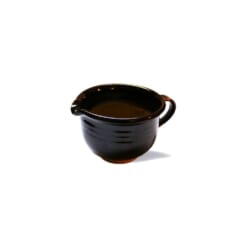
JPY 3,300 (incl. tax)
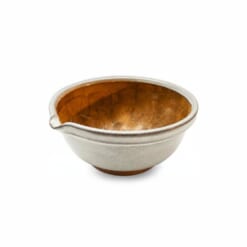
JPY 6,600 (incl. tax)
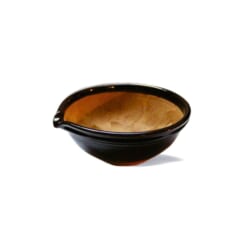
JPY 5,500 (incl. tax)
A bowl for your rice, too: masamura craft Berg Rice Bowl
masamura craft, developed under POTPURRI's direction, has its roots in Masamura Seitosho in Tajimi, Gifu. Berg rice bowls combine Nordic and Japanese impressions, a light feel in the hand and distinctive colors that flatter white rice. Their mountain-inspired textures suit autumn and winter ingredients. Add a favorite piece to your everyday table as the colder weather brings more meals at home.
JPY 1,650 (incl. tax)