
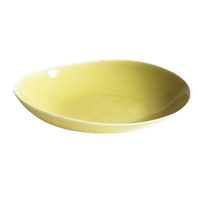
 Våg
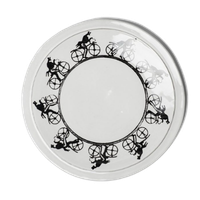 Mulet
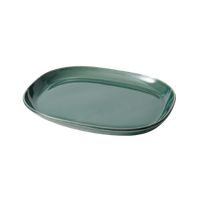 Torg
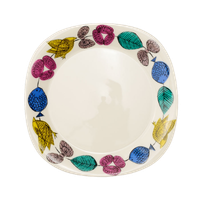 Cirkus
 Frost
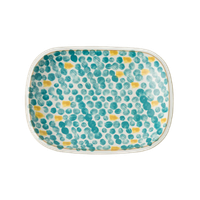 Fajans
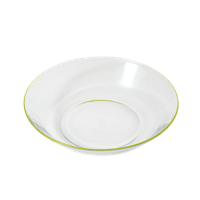 bitte
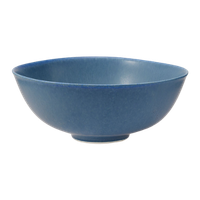 Glänta
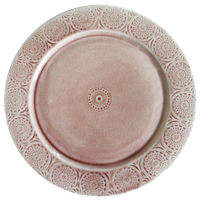 Ståmp
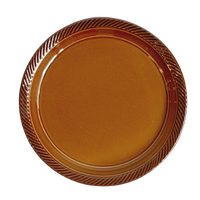 blur
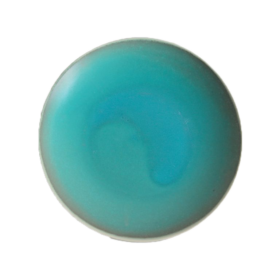 Terre
 RIMs
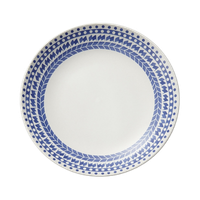 Root
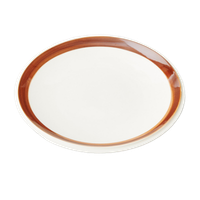 It
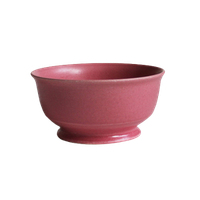 Chroma
About Tableware, Journal
Stig Lindberg and POTPURRI Fajans
June 2017 — No. 1

POTPURRI Fajans Teapot / Cup & Saucer / Small Fish Plate
Stig Lindberg and POTPURRI Fajans
Stig Lindberg, whose birth centenary was marked in 2016, was one of Sweden's leading twentieth-century designers. His work ranged from tableware and textiles to individual ceramics, picture books and wrapping paper, and continues to be admired around the world.
His approach has strongly influenced POTPURRI. Our Fajans collection grew from a wish to think about making everyday objects in a similarly thoughtful way.
Faience refers to a tradition of tin-glazed earthenware, rather than all European pottery. Lindberg brought vivid patterns and color to faience in the 1940s, creating pieces that offered an artistic presence in everyday life during difficult times.
POTPURRI's Fajans explores what that idea can mean today: tableware suited to everyday meals, with microwave and dishwasher compatibility, a practical price and patterns that brighten the day. Research and repeated prototypes helped develop the collection. Like other glazed ceramics, it should be handled with care; it is not scratch-proof.

Makita Shoten Stig Lindberg Umbrella Collection: DRAPES
Lindberg umbrellas by Makita Shoten, a weaving house founded in 1866
Makita Shoten, a Yamanashi weaving company founded in 1866, developed umbrellas featuring Stig Lindberg designs. Its fine woven patterns reproduce textile and ceramic motifs under supervision from the Lindberg estate.
The patterned underside brightens a rainy day, while sunlight brings out the colors on the outer surface. These umbrellas for rain and sun invite a closer look.
Jacquard weaving is a defining feature of Makita Shoten's umbrellas. The company combined its long experience of yarn dyeing and hand sewing with computerized weaving technology, developing new possibilities for patterned umbrella fabric.
In an earlier conversation, sixth-generation family member Yoichi Makita recalled hearing looms throughout the town as a child, and how much rarer that sound had become. An attachment to the local Gunnai weaving tradition, together with a willingness to explore new work, seems to echo Lindberg's own approach.

Tradition means passing on the desire to keep creating anew.
Keeping a craft alive for a century does not mean leaving it unchanged. It means paying attention to how people live, asking what can be made for them now, and sometimes taking a bold step. Perhaps it is that continuing attitude, passed between generations, that becomes tradition.
Long after Lindberg's death in 1982, craftspeople far from Sweden continue to find inspiration in his work, creating objects they hope will also be loved for years.

POTPURRI Fajans DRAPES — hand-painted, limited quantity, Kiyosumi-Shirakawa store exclusive at the time of this feature

