Våg
 Mulet
 Torg
 Cirkus
 Frost
 Fajans
 bitte
 Glänta
 Ståmp
 blur
 Terre
 RIMs
 Root
 It
 Chroma
BRAND, SELECT, Staff favourites, About Tableware, Journal
A Beautiful, Practical Suribachi from Keishuugama: Tried in Our Kitchen
What comes to mind when you think of a suribachi, the Japanese grooved grinding bowl?
Perhaps you picture a heavy traditional bowl, grooves that are difficult to clean, or a tool that occupies more cupboard space than its occasional use seems to justify.
Keishuugama's suribachi offers a fresh look at this traditional tool, with a beautiful shape and practical details.
Attractive as tableware and useful for preparation, this bowl has plenty to offer. Here is our sweet potato cake recipe to help you try it out.
Contents
1. More than sesame dressing: ways to use a suribachi
2. The thoughtful design of Keishuugama's suribachi
3. Sweet potato cakes made with Keishuugama's suribachi

1. More than sesame dressing: ways to use a suribachi
Sesame dressing and grated yam may be the best-known uses for a suribachi, but it can do much more.
Use it to mash food, prepare dressings and sauces, or combine potatoes and herbs. It can also double as a salad or serving bowl.
Freshly ground sesame would also be delicious in a bowl of miso ramen.
Keishuugama's suribachi is more than a grinding tool: it is beautiful enough to bring straight to the table. Let us introduce some of its qualities.

2. The thoughtful design of Keishuugama's suribachi
Keishuugama (圭秀窯) is a pottery in Koishiwara, in the village of Toho, Fukuoka Prefecture.
The original article introduces second-generation potter 梶原久, who combines Koishiwara techniques such as tobikanna chatter marks, brushed slip and combed grooves with forms suited to everyday life.
Each suribachi is carefully made by Kajiwara. Here are some of its distinctive details.

Feature 1: Beautiful combed grooves
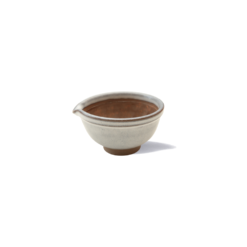
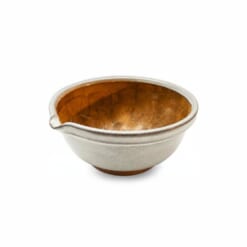
Its most striking feature is the combed pattern inside. Where many suribachi have straight grooves running toward the center, these are worked by hand into a decorative arrangement.
The pattern is practical as well as beautiful.

Feature 2: Quick, efficient grinding
When we tried grinding sesame, it quickly became light and fine. The intricate groove pattern and firmly fired surface work well together.
The firm, well-defined ridges help grind ingredients, while their intersecting pattern works air into the mixture.

Feature 3: Comfortable for left-handed users too
The intersecting grooves work in either direction, making the bowl comfortable for left- and right-handed users alike.

1. A useful pouring spout
The pouring lip makes it easier to transfer ground sesame mixtures, grated yam and other dressings or sauces.
Instead of the usual straight radial grooves, the wheel helps create an intersecting pattern that is designed for efficient grinding as well as visual appeal.

2. Suitable for microwave use
This suribachi is microwave-safe, so you can soften pumpkin or potato and mash it in the same bowl. It saves a step and reduces washing-up. Handle the hot bowl carefully.

3. Easy everyday care
Cleaning the grooves and preventing mold are common concerns with a suribachi. Whatever the clay, washing promptly and drying thoroughly before storage are essential.

3. Trying the suribachi: a sweet potato cake recipe
We tried making Japanese sweet potato cakes with Keishuugama's suribachi.
We used the following ingredients.
1 Japanese sweet potato
15 g butter
25 g sugar
35 g milk
A pinch of salt
Egg yolk, for brushing
Method
1. Peel and cut the sweet potato, place it in the microwave-safe suribachi and add 200 ml water. Cover loosely with microwave-safe wrap.
2. Microwave at 600 W for approximately 6–7 minutes, until a skewer slides easily into the sweet potato. Adjust the time to suit its size.
3. Carefully remove the hot bowl, uncover it away from your face and drain the water. Mash the sweet potato in the same bowl, then mix in the butter, sugar, milk and salt.
4. Shape the mixture into small portions, place them in oven-safe foil baking cups and brush the tops with egg yolk.
5. Place the filled foil cups on a suitable tray and cook in a toaster oven for about 6–7 minutes, until the tops are lightly browned. Adjust the time for your appliance.
Our method was adapted from a recipe on Cookpad. https://cookpad.com/recipe/3415826

Our staff's experience
Once the cut sweet potato was in the bowl, we could microwave and mash it without transferring it elsewhere. There was less washing-up, and no need to handle the hot potato directly. We wondered whether the intricate grooves would clog, but the mixture became smooth more quickly than we expected.

4. Cleaning your suribachi
Food caught in the grooves can look difficult to remove, but a little soaking and gentle brushing make cleaning much easier.
After use, soak the cooled bowl in warm water with a little dishwashing liquid for 20–30 minutes to loosen food. Gently clean the grooves with a suitable natural-fiber brush, then rinse well.
Avoid metal scourers, which can damage the surface and grooves.
For stubborn food caught in the grooves, a few wooden toothpicks held together with a rubber band can help dislodge it gently.
Dry the bowl thoroughly after washing before putting it away.
Keishuugama's relatively light, thin-walled suribachi has a bowl-like shape that stacks neatly with other large bowls.

5. A final thought
A suribachi is a versatile tool for many kinds of preparation.
Beautiful enough to serve from and useful in the kitchen, it makes a thoughtful wedding, housewarming or family gift.
Consider one as a gift, or for your own kitchen.