
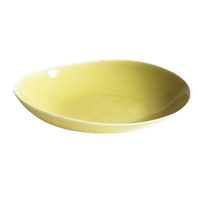
 Våg
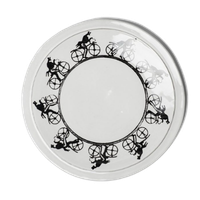 Mulet
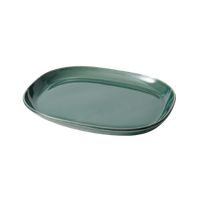 Torg
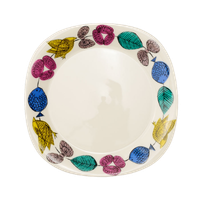 Cirkus
 Frost
 Fajans
 bitte
 Glänta
 Ståmp
 blur
 Terre
 RIMs
 Root
 It
 Chroma
BRAND, POTPURRI, Staff favourites, About Tableware, Journal
Glänta: At Home with Japanese and Western Food
Japanese, Western, Chinese and many other cuisines share space on the everyday Japanese table.
Japanese and Western dishes often appear together, yet combining the tableware into a setting that feels coherent can be surprisingly difficult.
POTPURRI created Glänta in response to that wish for a more harmonious everyday table.
Colors and shapes suited to simmered dishes and fish, with a surface that sits comfortably beside Japanese tableware: here, we explore the thinking and practical details behind Glänta.
Contents
1. Different traditions at the table
2. Glänta: Western-influenced tableware for Japanese food
3. A soft expression that sits beside Japanese ceramics
4. Practical details for everyday use

1. Different traditions at the table
A Western-style plate holding a hamburger steak may sit beside a Japanese rice bowl and soup bowl. If the combination feels visually uneven, it can help to think about the shapes and eating habits behind each piece.
Some of that difference comes from the eating habits around which the pieces developed. Here are a few tendencies to consider.
Japanese tableware traditions
• Earthenware made mainly from clay is one familiar material, alongside porcelain and other traditions.
• Bowls that are lifted during a meal need careful attention to weight, depth and the feel of the rim.
• Many Japanese settings mix different pieces, enjoying shapes selected for particular foods rather than a complete matching service.
Western tableware traditions
• Porcelain combines clay with stone-derived mineral ingredients and is familiar in many tableware traditions.
• Plates often remain on the table while knives and forks are used, so stability is an important consideration.
• Matching services are familiar in Western entertaining, creating continuity through shared forms and decoration.
Different habits of serving and eating have encouraged different forms. These are broad tendencies rather than fixed rules about materials or styles.
POTPURRI explored tableware that could bring these different meals and settings together.

2. Western-influenced tableware for Japanese food Glänta (collection
Glänta was conceived as Western-influenced tableware that feels equally at home with Japanese food.
Its forms and surfaces were developed with fish dishes, noodles and small Japanese side dishes in mind. Here are a few ways we use the pieces.

1. The Long Plate for fish and appetizers
The Long Plate's elongated shape works well for grilled fish, sashimi and long foods such as Pacific saury. Check the current product page for its exact dimensions.
Pickles, tsukudani and small snacks look neatly presented along the Glänta Long Plate.

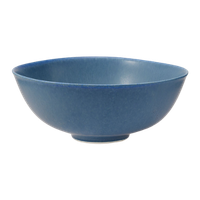
2. Bowl L for noodles and rice dishes
Bowl L was developed with noodles in mind. We studied many bowl forms to arrive at a comfortable, practical size.
A wide opening keeps the bowl comfortable to eat from, while sufficient depth holds soup. It is designed to be light and easy to handle, and also works for a shared salad.

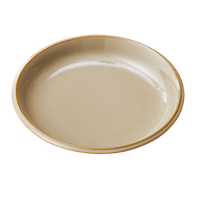
3. Plate S for side dishes with sauce
The 15 cm Plate S is a useful side plate for Japanese meals. Its depth accommodates a little sauce, making it suitable for stir-fries and simmered dishes.

4. A pitcher for sake, soy sauce and more
The pitcher was designed to hold one go of sake, approximately 180 ml. The ceramic body can be warmed as directed in its care instructions; avoid sudden temperature changes and do not place it over direct heat.
The wide opening is easy to wash, making the pitcher useful for soy sauce, dashi, dressing and other liquids.
Each piece includes details shaped by its intended use. Bowl S, for example, was developed for small side dishes with attention to how chopsticks rest against it.

3. A soft expression that sits beside Japanese ceramics
The secret to how Western-style Glänta sits so naturally with Japanese food lies in its glaze and gentle forms.
The glaze's soft texture and natural flow bring Glänta closer to the feel of Japanese tableware. This glaze was developed in-house by POTPURRI.
Through repeated selection of raw materials, calculations of mixing ratios and firing tests, we created a texture reminiscent of vintage Scandinavian tableware, with an earthenware-like feel that also harmonizes with traditional Japanese pieces.
Its curved, easy-to-hold shapes have a warmth reminiscent of Japanese tableware in which the craftsperson's hand can be felt.
These details reflect meals in which bowls are lifted and their rims touch the lips.

4. Practical details for everyday use
Glänta uses porcelain for a practical, everyday collection. Its material and shape were chosen together, rather than treating Japanese and Western tableware as separate categories.
Porcelain is fired at high temperatures, producing a relatively dense body that can be made thin and light. Microwave and dishwasher suitability depends on the particular body, glaze and decoration, so always follow the individual product's instructions.
Glänta is made for everyday use and is suitable for the microwave and dishwasher, following the care instructions for each piece.
Restaurant use was also considered, including the space around a serving that helps food look its best. Those details can make everyday meals easier and more enjoyable to present.

5. A final thought
Glänta brings together forms that suit Japanese meals and practical qualities for everyday use, while keeping the collection's Western influence.
We hope you enjoy these pieces both as a setting for food and as useful objects in daily life.


