POTPURRI Fajans Teapot / Cup & Saucer / Small Fish Plate
Stig Lindberg and POTPURRI Fajans
Around the centenary of his birth, we looked again at Stig Lindberg, one of Sweden's leading twentieth-century designers. His work ranged from tableware and textiles to ceramic art, picture books and wrapping paper. His approach strongly influenced POTPURRI, especially our Fajans collection.
Faience is a European ceramic tradition using an opaque white tin glaze over an earthenware body. In the 1940s, Lindberg brought vivid colors and bold designs to a tradition that had been losing ground to other wares. His pieces brought an artistic richness to everyday life and remain admired today.
POTPURRI's Fajans likewise asks what this tradition can be in contemporary life: tableware suited to microwaves and dishwashers, resilient in everyday use, accessible as a daily object and beautiful enough to brighten a busy day. Research, new techniques and repeated prototypes led to the collection we make today.
Makita Shoten Stig Lindberg Umbrella Collection: DRAPES
Lindberg umbrellas by Makita Shoten, a weaving house founded in 1866
Makita Shoten, a weaving house in Yamanashi founded in 1866, created umbrellas using Stig Lindberg's designs. Fine weaving reproduces motifs originally made for textiles and ceramics, under the supervision of the Lindberg family. The luminous patterns can be enjoyed from both sides of an umbrella made for rain and sun.
A defining feature is jacquard weaving, an unusual technique for umbrellas. While valuing handwork in yarn dyeing and sewing, the company adopted computerized jacquard looms early, a major decision that helped shape its future.
In the interview for this feature, sixth-generation maker Yoichi Makita recalled how weaving sounds once filled the town, while only a few workshops remained. That combination of attachment to the Gunnai weaving region and willingness to pioneer new methods seems fitting for a collaboration with Lindberg's designs.
Tradition means passing on the desire to keep creating anew.
Objects loved for a hundred years cannot be preserved by keeping everything unchanged for a hundred years. Makers must look at the people of their own time, ask what they can offer, and sometimes make bold decisions without fearing change. Perhaps passing on that spirit is what eventually becomes tradition.
Long after Stig Lindberg's death, craftspeople in Japan, far from Sweden, continue to create lasting objects with a similar outlook.
POTPURRI Fajans DRAPES — hand-painted, limited quantity, Kiyosumi-Shirakawa store exclusive at the time of this feature

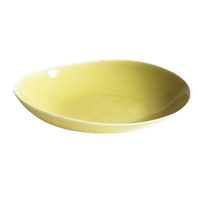 Våg
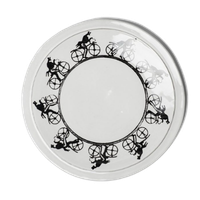 Mulet
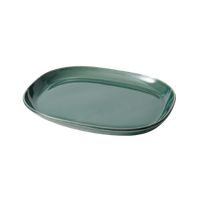 Torg
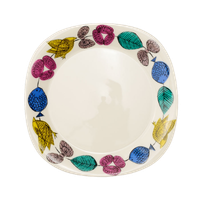 Cirkus
 Frost
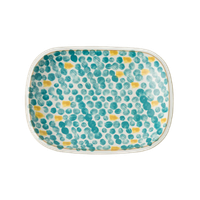 Fajans
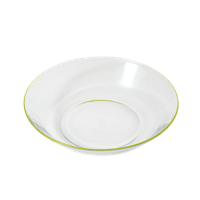 bitte
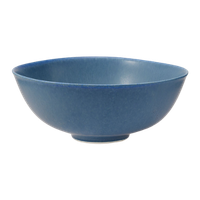 Glänta
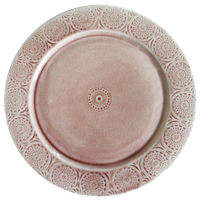 Ståmp
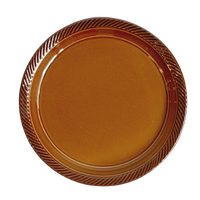 blur
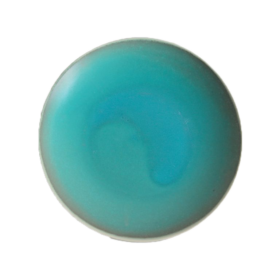 Terre
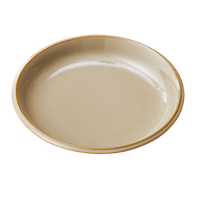 RIMs
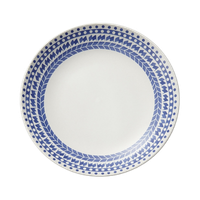 Root
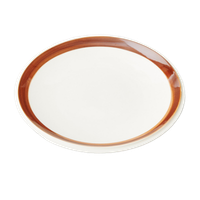 It
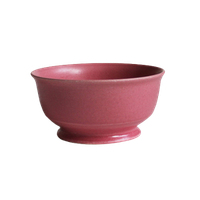 Chroma


